

 英语
英语 西班牙语
西班牙语Ground cover materials, often referred to as ground cover fabric or ground cover netting, are widely applied to protect soil surfaces in agriculture, landscaping, and outdoor operational environments. Unlike plant-based ground cover, these materials are manufactured from woven or non-woven synthetic fibers and are designed to deliver physical protection, surface stability, and controlled ground management over extended periods.
Commonly produced from polypropylene, ground cover fabrics combine strength, permeability, and resistance to environmental exposure. As a result, they are used across farms, greenhouses, construction sites, and landscaped areas where soil protection and surface control are required.
Functional Role in Agriculture
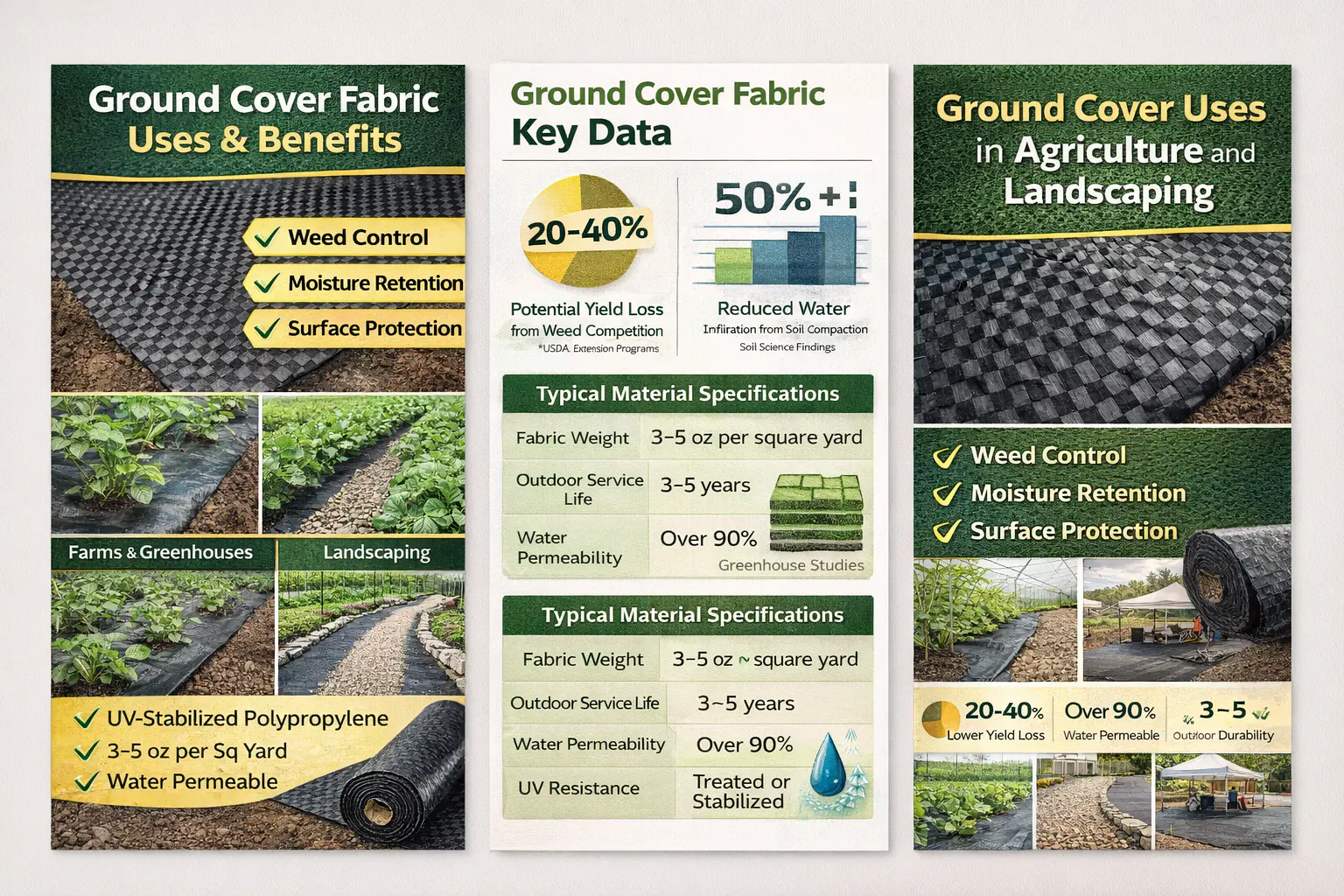
In agricultural and horticultural systems, ground cover fabric is primarily used for weed control, moisture management, and surface cleanliness. Woven polypropylene ground cover is commonly installed in greenhouses, nurseries, orchards, and crop rows.
In greenhouse environments, ground cover also contributes to hygiene and operational efficiency:
- Reduces soil splash during irrigation
- Limits the spread of soil-borne pathogens
- Improves worker safety by creating cleaner walking surfaces
Research referenced in greenhouse production guidelines shows that improved floor cleanliness can lower pathogen transfer by around 30% compared with uncovered soil floors, particularly in high-humidity environments.
Applications in Landscaping and Construction
Beyond agriculture, ground cover is widely used in landscaping and light construction projects. Landscape fabric is typically installed beneath gravel paths, decorative stone layers, or hardscape features to separate soil layers and maintain surface stability.
In construction and temporary outdoor installations, heavier ground cover fabrics are applied to protect soil from compaction caused by pedestrian traffic or light machinery. Soil science studies indicate that excessive compaction can reduce water infiltration rates by more than 50%, increasing surface runoff and erosion risk. Ground cover acts as a buffer layer, helping preserve soil structure during short-term or seasonal use.
Common non-agricultural applications include:
- Walkways and access paths
- Event and exhibition grounds
- Temporary work zones
- Landscape underlayment for stone or mulch
Material Performance and Durability
Most commercial ground cover fabrics are manufactured from UV-stabilized polypropylene, a material selected for its balance of strength, moisture resistance, and outdoor durability.
Typical material specifications include:
| Feature | Common Range |
|---|---|
| Fabric weight | 3–5 oz per square yard |
| Expected outdoor service life | 3–5 years |
| Water permeability | Over 90% |
| UV resistance | Treated or stabilized |
Permeability is a key performance indicator. Industry testing shows that woven ground cover fabrics can maintain over 90% water permeability while effectively preventing soil migration, making them suitable for both irrigation-intensive and rainfall-exposed environments.
Practical Value Across Industries
Ground cover materials are now used across farming, landscaping, construction, and outdoor event management. By reducing manual weed control, limiting surface damage, and improving site cleanliness, ground cover supports more efficient operations in both long-term installations and temporary applications.
FAQ
What is ground cover fabric made of?
Most ground cover fabrics are produced from woven or non-woven polypropylene and are often treated for UV resistance.
Does ground cover block water?
No. Quality ground cover is engineered to allow water and air to pass through while limiting soil displacement.
How long can ground cover be used outdoors?
Depending on fabric weight and UV exposure, many products are suitable for three to five years of outdoor use.
Is ground cover suitable for greenhouses?
Yes. Ground cover is commonly used in greenhouses to improve cleanliness, manage weeds, and support efficient irrigation.
Can ground cover be reused?
Woven ground cover can often be reused if it remains structurally intact and free from major damage.