

 英语
英语 西班牙语
西班牙语HDPE UV Shade Net has become a widely used material across multiple sectors due to its balance of durability, light control, and ventilation.
Agricultural Microclimate Control
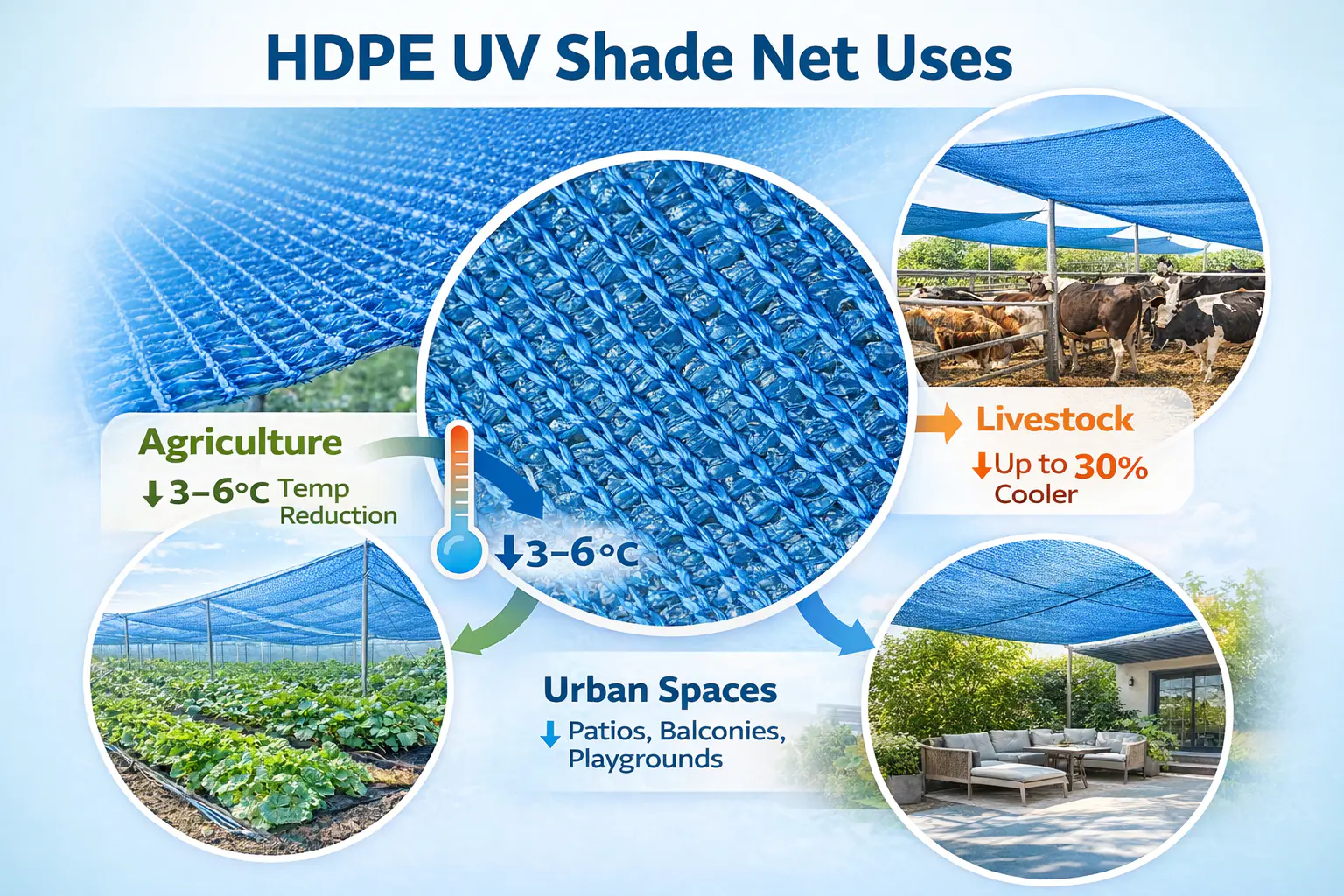
In agriculture, HDPE UV shade nets are commonly installed over greenhouses, nurseries, and open-field crops to regulate sunlight exposure. Research published by agricultural extension services shows that shade nets with a 40–60% shading rate can reduce ambient temperatures beneath the net by approximately 3–6°C during peak sunlight hours. This reduction helps limit plant stress while maintaining sufficient light for photosynthesis.
UV-stabilized HDPE material plays an important role here. Continuous exposure to sunlight can degrade untreated plastics, but UV-treated HDPE nets are typically rated for outdoor use over multiple growing seasons. Farmers often select different shading rates depending on crop type; leafy vegetables and seedlings generally require higher shading levels, while fruiting crops benefit from moderate light filtration.
Another frequently discussed benefit is water efficiency. By reducing direct solar radiation and wind impact, shade nets can lower soil evaporation rates. Field trials in warm regions have shown water savings of around 10–25% when shade nets are used in combination with drip irrigation systems.
Livestock and Animal Housing Applications
Heat stress in livestock is a growing operational concern, particularly in regions with long periods of high temperatures. HDPE UV shade nets are increasingly used in cattle yards, poultry farms, and equine facilities as a simple structural solution.
According to livestock management studies, providing shaded areas can lower surface temperatures in animal enclosures by up to 30% compared to unshaded ground. In dairy farming, reduced heat exposure has been associated with more stable feed intake and improved milk yield consistency during hot months.
The breathable structure of shade netting allows airflow to pass through, which distinguishes it from solid roofing materials that may trap heat. This makes HDPE UV shade nets suitable for temporary or semi-permanent installations where ventilation is critical. Many producers also favor the material because it is lightweight, foldable, and can be repositioned as needed.
Urban Outdoor and Semi-Private Spaces
Beyond agriculture and farming, HDPE UV shade nets are appearing more frequently in urban settings. Residential patios, balconies, playgrounds, and parking areas use shade netting to create partially shaded environments without fully blocking daylight.
Urban design discussions often highlight UV exposure. Data from environmental health agencies indicates that prolonged outdoor exposure can result in high UV index levels, even on days with moderate temperatures. Shade nets rated for UV protection are designed to filter a significant portion of ultraviolet radiation while still allowing visible light and airflow.
Another aspect driving interest is adaptability. Shade nets can be installed vertically for privacy screening or horizontally for sun control, making them suitable for mixed-use outdoor spaces. Their relatively low material weight also reduces structural load requirements compared to rigid shading systems.
Conclusion
HDPE UV Shade Net is increasingly valued not for novelty, but for its practical performance across different environments. From managing crop conditions and supporting animal welfare to improving comfort in urban outdoor areas, its applications reflect a shift toward adaptable, light-regulating solutions that address everyday environmental challenges.
FAQ
What is HDPE UV Shade Net made from?
It is produced from high-density polyethylene with added UV stabilizers to improve outdoor durability.
How much temperature reduction can a shade net provide?
Depending on shading rate and conditions, temperature under the net may be reduced by about 3–6°C in agricultural settings.
Is shade netting suitable for livestock use?
Yes, it is commonly used to reduce heat exposure while maintaining airflow in animal housing areas.
Can HDPE UV Shade Net be used in residential spaces?
It is often used for patios, balconies, and outdoor seating areas to provide sun protection and partial privacy.